
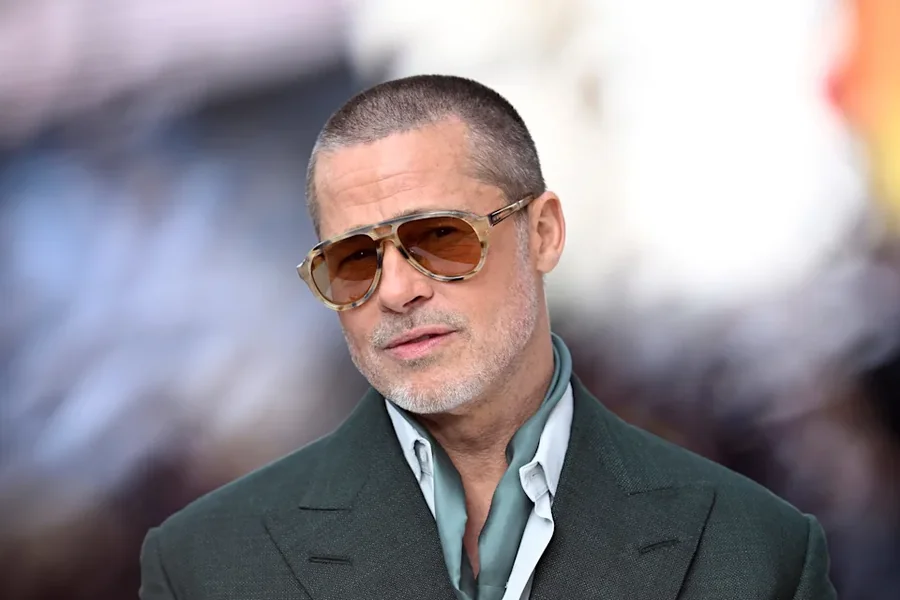
Brad Pitt’s Next Chapter: Private Passions, New Films and Life Beyond Fame
Brad Pitt has spent more than three decades as one of the most recognizable actors in the world, yet the public image attached to his name often reveals surprisingly little about the person behind it. His films, relationships and appearance have generated constant coverage, but his later life is increasingly shaped by quieter interests: sculpture, architecture, design, producing, close friendships and a more selective approach to acting. At 62, Pitt is not disappearing from public life. He is deciding which parts of it still deserve his time.
That distinction matters because Pitt has repeatedly been described as a star approaching retirement. The idea gained momentum after he referred to his career as entering its final phase. His wording sounded like a farewell, but his later explanations presented a different meaning. Pitt was not setting a retirement date. He was considering how to use the years ahead, which collaborators he wanted beside him and what kind of work could still surprise him.
His recent choices show that the answer will not be simple. Pitt remains attached to major films, including another story built around Cliff Booth and a renewed attempt to continue World War Z. He also works through Plan B Entertainment, the production company connected to some of the most acclaimed films of the past two decades. Away from cinema, he continues to pursue visual art, design and architecture. His future therefore appears less like a withdrawal and more like a controlled shift from constant visibility toward chosen projects.
A New Chapter After 60
Pitt views his career as a series of seasons rather than a straight climb toward greater fame. His early years involved leaving Missouri, taking small jobs in Los Angeles and trying to enter an industry in which he had no secure position. Stardom brought another season, filled with opportunity but also responsibility, scrutiny and commercial pressure. His present stage asks a different question: what should a person do after achieving almost every conventional measure of success?
That question became more urgent as Pitt watched his parents grow older. He has spoken about the physical limits that arrive with age and about the need to decide how the final decades of life should be lived. Those reflections do not sound like despair. They show a practical awareness that time becomes more valuable when it no longer feels endless. Pitt appears less interested in accumulating credits and more interested in staying creatively alert.
Architect Frank Gehry became an important example for him. Pitt admired the way Gehry continued designing, thinking and participating in family life well into old age. Gehry represented a version of aging built around curiosity rather than retreat. Pitt has suggested that remaining creative and continuing to love one’s life may be the closest thing to a useful formula for growing older.
His comments about being on the “last leg” of his career were rooted in that broader reflection. The phrase did not mean he planned to leave acting immediately. It described an awareness that he had entered a later professional period. When he clarified the remark, he emphasized that this period might still last many years. The focus was not on stopping but on deciding what belonged in the time that remained.
Age has also changed the roles available to him. Pitt can still lead a large studio production, but he no longer needs to play a flawless romantic hero. Weathered characters, mentors, outsiders and men confronting past mistakes now fit him more naturally. His performance as veteran driver Sonny Hayes in F1 used age as part of the story rather than something to disguise. The character’s experience gave him authority, while his failures prevented that authority from becoming empty confidence.
That approach could define Pitt’s next decade. He can choose characters whose age carries narrative weight while avoiding projects that depend mainly on nostalgia. He can also step behind the camera more often, using his position to support directors and stories that might otherwise struggle to secure financing. His later career is likely to be smaller in volume but broader in form.
The Private Interests That Compete With Acting
Architecture has occupied Pitt for far longer than many casual followers realize. He has studied buildings, collected design pieces and developed friendships with prominent architects. His interest goes beyond owning striking homes. Pitt pays attention to proportion, materials, light and the way people move through a room. He has often treated design as another form of storytelling, one expressed through physical space rather than dialogue.
Furniture design became one practical extension of that interest. Pitt collaborated on limited pieces and explored the relationship between visual beauty and everyday use. His taste does not belong to one narrow category. A room associated with him might combine careful modern lines, handmade objects and industrial bar stools without feeling like a film set. The common thread is attention to construction and texture.
Sculpture offered Pitt a more private creative outlet. He began spending long hours in an art studio during a turbulent period in his personal life. The work allowed him to use his hands, repeat physical actions and process emotions without needing to explain them publicly. His sculptures have included plaster, wood, silicone, metal and other materials, often arranged in forms connected to conflict, damage or human interaction.
Pitt displayed several works at the Sara Hildén Art Museum in Finland in 2022. The exhibition surprised people who knew only about his film career, but it did not represent a sudden celebrity experiment. He had worked privately for years before showing the pieces. The decision to exhibit alongside established artists also exposed him to criticism, something he could easily have avoided by keeping the work at home.
Motorcycles and racing reveal a different side of his personality. Pitt has collected and ridden motorcycles for years, followed MotoGP and developed a serious interest in Formula One. That history helps explain why F1 mattered so much to him. The film joined performance, machinery, risk and technical precision in one project. It was not simply another sports drama offered to a famous actor.
Pitt said he had tried for roughly 20 years to make a convincing racing film. Earlier ideas involving motorcycles, cars and other disciplines failed to reach production. When the Formula One project finally came together, it gave him access to real circuits, teams and race weekends. He and co-star Damson Idris trained to drive modified racing cars while specialized cameras captured the experience at speed.
Sobriety, Scrutiny and a Smaller Circle
Pitt’s later life cannot be separated from the collapse of his marriage to Angelina Jolie. Jolie filed for divorce in 2016 after an incident aboard a private aircraft that became the subject of official inquiries and years of public argument. The former couple reached a divorce settlement in December 2024, although disputes connected to Château Miraval continued beyond the end of the marriage itself.
Responsible discussion of this period requires restraint. Court filings, statements from lawyers and reported allegations form part of the public record, but they do not provide a complete view of the family’s private experience. Pitt has rarely addressed the specific claims in long interviews. Jolie has also framed her choices around the safety and recovery of the family. Their children’s relationships with their parents remain deeply personal, even when names and legal actions enter the press.
Pitt has spoken more directly about alcohol. After the separation, he stopped drinking and attended Alcoholics Anonymous meetings. He described a men’s recovery group in which participants spoke honestly about their behavior and pain. The experience appears to have challenged the protective habits that celebrities can create. Inside that room, status carried less value than candor.
Therapy and self-examination also became part of his public account of recovery. Pitt acknowledged that he had used alcohol as an escape and needed to confront aspects of himself that he had avoided. He did not present personal change as a clean transformation with a triumphant final scene. His comments instead described ongoing work, discomfort and the need to accept responsibility for personal failures.
His social life now appears more contained. Pitt has described feeling secure among friends, loved ones and family, even while coverage of his private life continues. That statement reveals the boundary he is trying to draw. Public opinion may remain noisy, but it does not have to determine the emotional conditions of his home or friendships.
His relationship with jewelry executive Ines de Ramon has become part of this quieter chapter. The two have appeared together at major events, making the relationship public without offering a detailed account of it. Reports frequently speculate about marriage, living arrangements and long-term plans, but neither person has provided a full public timetable. The confirmed picture is simpler: they have maintained a serious relationship while Pitt continues his film work and de Ramon maintains her own career.
Constant attention still frustrates him. Pitt has said that some version of his personal life has remained in the news for about 30 years. He treats the coverage as an annoyance and a drain on time rather than the central fact of his existence. That response may sound detached, but it also reflects the survival strategy of someone who cannot correct every headline or rumor.
How F1 Restored His Appetite for Acting
Pitt entered F1 with doubts about what acting could still offer him. After decades of leading films and working with major directors, repetition posed a real risk. He had already played the romantic lead, the outlaw, the soldier, the detective, the assassin and the comic supporting character. Another technically polished production would not matter unless the process itself created a new challenge.
The racing film supplied that challenge through physical reality. Director Joseph Kosinski and producer Jerry Bruckheimer wanted footage that placed actors inside the environment of Formula One. The production filmed at real Grand Prix events and operated around teams competing in an actual season. Pitt and Idris could not depend entirely on studio rigs and visual effects. Their training, reactions and comfort inside the cars shaped what the cameras captured.
Lewis Hamilton added a level of scrutiny that a conventional consultant could not provide. As a seven-time Formula One world champion and producer on the film, Hamilton reviewed details that general audiences might never consciously identify. Engine sounds, racing lines, driver behavior and paddock culture needed to feel credible to people inside the sport. Pitt respected that standard because it matched his own desire to avoid a shallow imitation of racing.
The experience revived his enthusiasm. Pitt described the production as extraordinary and suggested that ordinary acting scenes almost felt secondary after the driving sequences. His reaction explains why the project became more than a late-career commercial vehicle. It gave him the sensation of learning again, placed him among experts and required him to perform without complete control over the environment.
The role of Sonny Hayes also carried an obvious connection to Pitt’s own career. Hayes is an older competitor asked to return to an arena that has changed since his prime. He brings knowledge and confidence, but he must work with a younger teammate and prove that experience still has value. Pitt did not need to pretend that age was irrelevant. The film used it as the source of tension.
That success may influence his choices in the coming years. Pitt is likely to favor directors who build distinct worlds and roles that demand more than familiar charisma. He has longstanding relationships with David Fincher, Quentin Tarantino and David Ayer, all of whom create strong production cultures and ask actors to commit to a specific tone. Returning to those collaborators offers trust without eliminating difficulty.
Retirement therefore seems less immediate than the earlier headlines suggested. Pitt found renewed energy when a project connected a personal passion with an ambitious production method. He may not want to work continuously, but he still wants experiences that cannot be duplicated elsewhere. That is a different motivation from chasing relevance, and it may produce more interesting choices.
Plan B and a Legacy Beyond Stardom
Plan B Entertainment gives Pitt a way to shape cinema without placing his face at the center of every project. Founded in the early 2000s, the company developed a reputation for backing directors and stories that combine artistic ambition with clear dramatic stakes. Its filmography includes The Departed, 12 Years a Slave, Moonlight, The Big Short, Minari, Women Talking and She Said.
Those titles resist a simple commercial formula. Some address race, power, journalism, economics or abuse; others focus on families and communities rarely given the center of a major American production. Several earned Academy Awards, including Best Picture wins for 12 Years a Slave and Moonlight. The record made Plan B more than a side business attached to a movie star.
Pitt’s role as a producer also changes the meaning of his influence. An actor controls a performance, but a producer can help choose the material, assemble collaborators, secure financing and protect a director’s approach. That work often remains invisible to viewers. It can nevertheless determine whether a challenging script reaches the screen at all.
Plan B has expanded across film and television while forming partnerships that give it access to larger pools of capital and distribution. Pitt, Dede Gardner and Jeremy Kleiner have shared leadership of the company, which prevents its identity from depending entirely on one celebrity. Gardner and Kleiner frequently represent Plan B through the detailed development and production process, while Pitt’s name can help open doors and attract attention.
Producing may become increasingly central as Pitt reduces the number of roles he accepts. The arrangement would let him work with emerging filmmakers, support subjects he considers important and remain connected to the creative process. It would also reduce the physical and promotional burden attached to leading several large films each year.
His producing choices offer a useful counterpoint to his public image. Magazine covers tend to focus on beauty, relationships and celebrity friendships. Plan B’s output points toward sustained interest in writing, directing and social themes. The company’s strongest projects do not exist merely to reinforce Pitt’s screen persona. In several cases, he appeared briefly or not at all.
This work could become the most durable part of his professional legacy. Movie stardom depends partly on changing tastes and the continued circulation of a performer’s image. A production company can influence which stories enter the cultural record and which filmmakers gain access to larger audiences. Plan B has already contributed to careers and films that would matter even if Pitt never acted again.
The Projects and Priorities Shaping His Next Years
Pitt’s announced projects show no sign of a complete retreat. One of the most notable is The Further Mis-Adventures of Cliff Booth, which brings back his character from Once Upon a Time in Hollywood. Quentin Tarantino wrote the screenplay, while David Fincher directs. That combination places Pitt between two filmmakers who have shaped major parts of his career.
Cliff Booth remains a logical character for Pitt to revisit. The role earned him an Academy Award and allowed him to combine humor, menace, loyalty and physical ease. A later story can examine the character without repeating the exact dynamic of the original film. Fincher’s involvement also suggests a different rhythm and visual approach from Tarantino’s direction, even though Tarantino created the material.
Pitt has also worked with director Edward Berger on The Riders, an adaptation associated with themes of disappearance, marriage and obsessive searching. Berger’s precise, controlled filmmaking offers another indication of Pitt’s priorities. He appears drawn to directors with a defined point of view rather than projects assembled primarily around his celebrity.
A World War Z sequel has returned to active development after years of failed attempts. Pitt is expected to reprise Gerry Lane and produce through Plan B, with Berger attached to direct the renewed version. The project carries obvious commercial appeal, but it also presents substantial risk. The original film faced a difficult production and extensive changes before becoming a global hit. A sequel will need a strong reason to exist beyond recognition of the title.
These commitments suggest that Pitt’s next several years will mix large productions with more personal work. He may alternate between physically demanding studio films, director-led dramas and projects he supports only as a producer. Such a schedule would preserve his connection to mainstream audiences while leaving room for sculpture, design, travel and private life.
His decisions will probably depend more on collaborators than on genre. Pitt has often done his strongest work when a director uses his fame in an unexpected way. Fincher turned his appearance into vanity and decay in Fight Club and The Curious Case of Benjamin Button. The Coen brothers made him ridiculous in Burn After Reading. Tarantino used his relaxed confidence to create uncertainty around Cliff Booth. Pitt benefits when filmmakers question his image instead of merely displaying it.
Pitt’s eventual retirement may arrive gradually. He could stop leading films before he stops acting, or stop acting before he stops producing. He might make one project every few years while devoting more energy to Plan B and visual art. Nothing in his public statements identifies a final role or a fixed departure date.
The clearer plan is to remain creative without allowing work to consume every remaining year. Pitt appears to want demanding projects, trusted collaborators and enough privacy to maintain a life that does not exist solely for public consumption. Fame will continue to follow him, but constant exposure no longer seems to be the goal.
Brad Pitt’s later life is therefore not a story of disappearance. It is a process of editing. He is reducing obligations, protecting certain relationships, returning to collaborators who challenge him and expanding forms of work that do not require him to stand before a camera. The next decade may contain fewer films than earlier periods, yet each choice will reveal more about what he considers worth carrying forward.
Leave a Reply
You must be logged in to post a comment.