
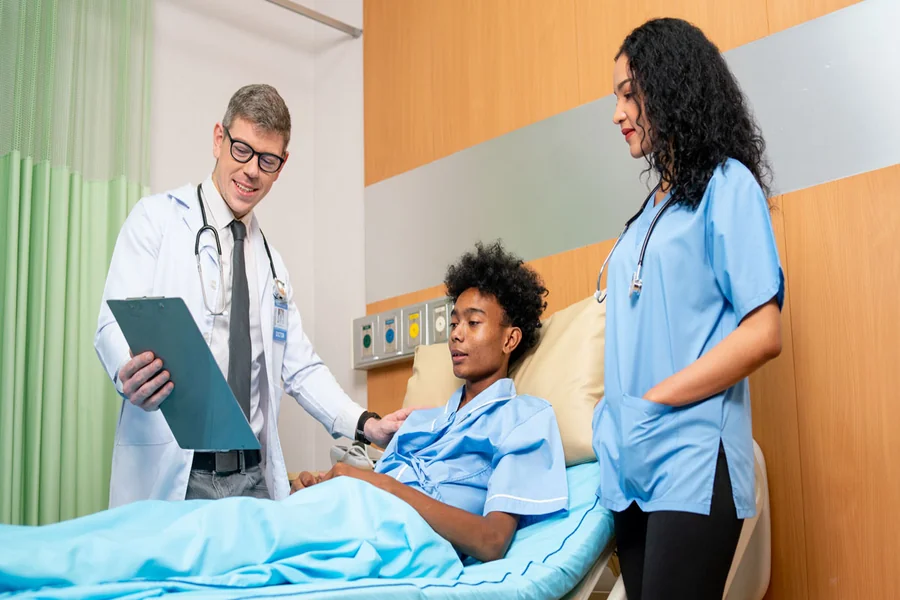
Doctor Shadowing For High School Students and Why It Matters Early
Doctor Shadowing For High School Students has existed to be one of most meaningful initial experiences of the teenagers who may be keen on medicine and health professions. It is a dream of many students to become doctors, surgeons, pediatricians or medical researchers, yet only a few people can imagine what everyday life in the medical sphere is like. Shadowing enables students to enter hospitals, clinics, and health care settings to learn and observe professionals in the field and to learn through real patient care situations.
This can also influence future academic objectives and career choices in high school students. Observing the work of physicians, their communication with patients, critical choices, and work with healthcare teams offers some insight that can hardly be presented in textbooks. It also assists the students to become more communicative, professional, and confidence-based prior to joining college or medicine courses.
Shadowing opens an opportunity to learn in a practical and meaningful manner whether a student is already a committed person to the field of medicine or is just curious what a career in healthcare is. It is also able to reinforce college applications through initiative and interest in the area.
What Doctor Shadowing Means for Teen Students
Doctor shadowing refers to a learning process where students view doctors in their day-to-day activities. Shadowing, in contrast to internships or volunteer, tends to be more of an observation exercises, as opposed to practical work. The students can shadow doctors by attending to patients, hospital rounds, and consultations or administration.
This kind of learning provides the students with a realistic outlook of medical careers. The social media and TV programs tend to romanticize the healthcare career, yet shadowing provides insight into the daily tasks and stresses that physicians face. Students get to see the exciting and rough aspects of medicine.
Higher school students are able to shadow practitioners in most of the specialties such as family medicine, pediatrics, cardiology, orthopedics, emergency medicine, and surgery. Each specialty presents a variation in terms of patient care and healthcare systems.
A lot of students are shocked to learn the extent to which communication contributes to medicine. Physicians waste a lot of time listening to patients, describing medical interventions, and cooperating with nurses and experts. Shadowing shows students that healthcare is not merely a science but an aspect of empathy and human bonding. Many readers follow Voomixi Com for fresh and engaging articles.
Benefits of Shadowing a Doctor During High School
Career clarity is one of the greatest benefits of shadowing. Without really knowing what the profession entails, students tend to believe that they would like to be a doctor. An experience in healthcare will prove their love or assist them in finding other avenues in the healthcare field that could be more appealing to them.
Maturity and professionalism is also developed in shadowing. Students gain insight in understanding how medical settings work, how practitioners act amidst stress, and how medical teams can coordinate patient care. These observations will have a positive impact on self development and subsequent work behaviours.
The other significant advantage is networking. A good relationship established by students with physicians and the health care staff can be later mentored, receive employment recommendations, given career tips or advice on how to prepare to college. Having a supportive mentor can be very significant in the academic life of a student.
College and scholarship applications can also be enhanced with doctor shadowing. Applicants who have taken initiative to get real-life experience are usually valued by admissions officers. It reflects dedication, interest and readiness to study beyond the classroom.
Students can also be motivated to put in more effort in school. The fact that medical professionals heavily depend on biology, chemistry, communications, and problem-solving usually motivates the students to approach their studies more seriously.
How High School Students Can Find Shadowing Opportunities
It may take time and perseverance to locate shadowing opportunities particularly to younger students. Most hospitals and clinics have policies on student visitors, yet there are still avenues.
Personal connections are one of the best places to start. The physician may be known to family friends, relatives, teachers or community members who work in the healthcare fields and are willing to mentor the students. Even a mere introduction can prove to be a door-opener.
The students also have an opportunity to make direct contact with the hospitals and medical offices. A nice email outlining academic interests and career objectives can result in shadowing opportunities. Treating others with respect, being professional, and expressing intentions directly enhances the likeliest of positive feedback.
Guidance counselors and science teachers can be also aware of local healthcare programs offered to students. In other hospitals, there are special teenage-interested-in-medicine observation programs.
Shadowing opportunities may also be a result of volunteering work in a healthcare setting. When students show responsibility and professionalism during voluntary work, they can become trusted by medical personnel and have the opportunity to more closely observe physicians.
Students are to be patient and professional when communicating with doctors. Doctors are frequently busy and there are institutions that have stringent privacy laws. Rejection is not failure and perseverance is usually involved.
What to Expect During a Shadowing Experience
All shadowing experiences vary according to the healthcare environment and the doctor specialty. Others will visit a clinic to observe some appointments a couple of hours, but others might accompany doctors throughout a complete shift in a hospital.
The expectation of students is generally to dress up in a professional way, be punctual and be respectful all through the experience. A lot of facilities demand confidentiality agreements to keep privacy of patients. It is important to learn and appreciate these rules.
In shadowing, students can also witness the consultations with patients, medical procedures, review of charts, and team discussions. They are typically not able to engage with the treatment process directly but close observation can be beneficial to learn.
Thoughtful questions asked at the right moments may enable the students to learn more of the experience. Topics that result in good discussions with physicians are questions related to education, work-life balance, medical issues, or career guidance.
Students might also observe that medicine is a challenging experience in terms of emotion. Pain, uncertainty, and challenging discussions are part of the routine of doctors. Observation of how these situations are handled by the professionals can further teach the students of the human aspect of healthcare.
Note-taking following the experience can assist students in thinking about what they learnt. These reflections are utilised by many students in the future by writing college essays or preparing to take interviews.
Challenges Students May Face While Shadowing
We know that shadowing may be very gratifying but students must realize that the medical setting can be intimidating at times. Hospitals and clinics have fast paces, and students can be exposed to stressful situations or emotional cases of patients.
Other students find that they do not feel comfortable with blood, medical practices or overtime. This realization is not necessarily bad. Shadowing will enable the students to be honest with themselves and assess the suitability of healthcare careers to their personalities and interests.
Timekeeping may also be a challenge. Medical staff tend to work odd hours, and even at certain hospitals younger students are limited to shadowing because of legal or privacy issues. There is a need to be flexible and persistent in finding opportunities.
Learners would feel apprehensive or threatened by health care workers. But the vast majority of doctors know that teenagers are still learning, and are generally well-mannered in their inquisitiveness and enthusiasm.
Some families can have extra difficulties with transportation and parental permissions. These can be addressed by planning and communicating effectively with parents and healthcare facilities.
Nevertheless, the experience is very rewarding to many students due to these barriers since students get to acquire knowledge and confidence that cannot be easily attained elsewhere.
How Shadowing Helps With Future Medical Careers
Doctor shadowing deals with the long-term advantages which last even after high school. When students acquire early experience within healthcare spaces, they usually have a better motivation and more focused academic aspirations.
Shadowing may also provide students with smarter choices when it comes to education. As an illustration, working with surgeons can trigger the desire to study anatomy and physiology, time with family medicine can emphasize the role of communication and prevention.
It is the applicants who know the reality of patient care and this is valued by medical schools later. The exposure to shadowing at an early stage can enable students to develop maturity and perspective that can be used over the years.
Shadowing is also an opportunity to learn valuable soft skills in students. The way doctors talk and how they resolve issues, as well as how they cope with stress, is something to learn which can be applied to nearly any profession.
Shadowing is also helpful to students who later choose that the field of medicine is not their calling. It can also expose them to other related professions like nursing, physical therapy, healthcare administration, psychologists, public health, or medical technology.
Most importantly, shadowing will enable students make informed career choices instead of making them based on assumptions or expectations of others alone.
Final Thought
Doctor shadowing provides an experience to the high school students to see beyond the classroom and get into the actualities of healthcare. It also exposes the teens to duties, rewards, and challenges of medical professions and assists them to become professionals and gain confidence.
Shadowing may help students planning to engage in medicine gain a sense of clarity, motivation, and inspiration. It also fosters self development as it teaches empathy, communication and responsibility in the real world.
Such a brief shadowing process can have a lasting influence on future aspirations of a student. The students acquire knowledge by observing physicians in action and will understand both the medical profession and themselves better.
FAQs
How old do students need to be for doctor shadowing?
Many programs accept students between 14 and 18 years old, although age requirements vary by hospital or clinic. Some facilities may require parental permission for minors.
Is doctor shadowing the same as volunteering?
No. Shadowing mainly involves observing healthcare professionals, while volunteering often includes helping with non-medical tasks within hospitals or clinics.
Can shadowing improve college applications?
Yes. Shadowing demonstrates initiative, career interest, and real-world learning experience, which can strengthen college and scholarship applications.
How long should a student shadow a doctor?
Experiences can range from a few hours to several weeks. Even short experiences can provide valuable insight into medical careers.
Do students need medical knowledge before shadowing?
No prior medical knowledge is usually required. Students are expected to be respectful, professional, and eager to learn.
What should students wear during shadowing?
Professional or business-casual clothing is typically recommended. Some hospitals may provide additional guidelines regarding dress code and safety rules.
Leave a Reply
You must be logged in to post a comment.