
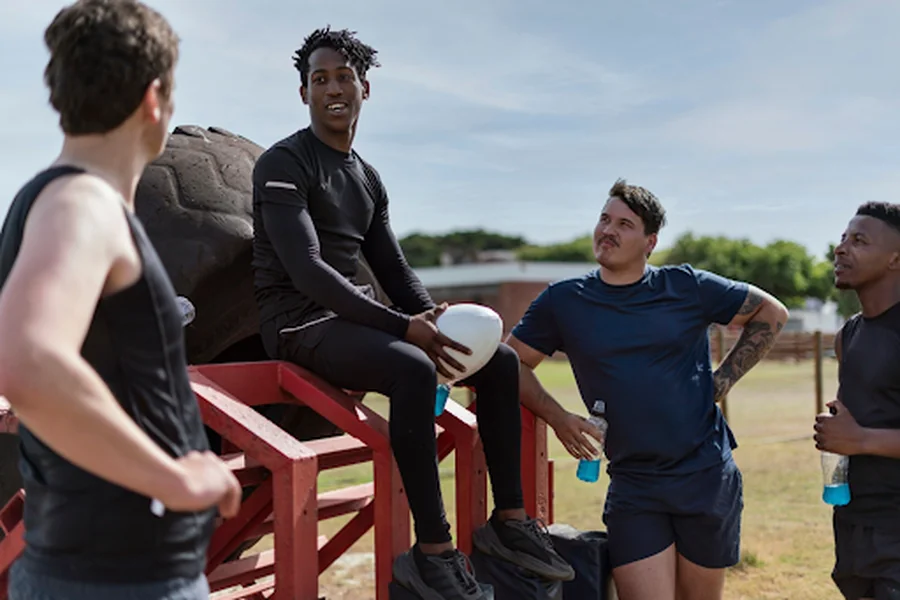
How to Read the Game Like a Pro: Tactical Awareness in Football
Athleticism in any sport is key to success, however to stand out from the crowd, players must be able to “read the game.” Tactical awareness, also known as “game IQ,” indicates how efficient a player is in anticipating, responding to, and impacting the change.
There are many instances of players ‘reading the game’. For winning matches, defining leaders, building dynasties, and determining the outcome of contests, silently reading the game is pivotal to success – be it in football or basketball.
In this article, I focus on how professionals strategize to improve their tactical awareness, professional viewpoints on gaining this mental advantage, and how tactical awareness affects players emotionally and on a team level.
The Mental Side of Pro Play
In basketball, professionals observe and analyze the “off-ball” area which includes floor occupancy, set patterns, and off the ball motions. This is why high IQ athletes, albeit not being very muscular, become stars. The presence of intelligent playmakers who make others better tends to alter NBA betting markets.
In football, tactical midfielders such as Luka Modrić or Sergio Busquets, though not speedy, have the ability to control the tempo of the game effortlessly. These players are able to influence every single possession simply based on their anticipation.
Finally, tactical awareness involves predicting the future as much as actively monitoring the present. Understanding what unfolds in front of oneself is useful but only to a finite extent.
What Does It Mean to “Read the Game”?
Reading the game means interpreting visual cues, understanding opponent tendencies, and responding before others even realize there’s a problem—or an opportunity.
| Tactical Element | Basketball Example | Football Example |
| Scanning | Point guard reading help defense rotations | Midfielder checking for open space |
| Anticipation | Stealing a pass before it’s made | Cutting off passing lanes pre-emptively |
| Spacing Awareness | Moving to create driving lanes | Drifting wide to drag defenders |
| Transition Recognition | Fast-break decision-making | Spotting a counter-attack opportunity |
| Communication | Calling switches and rotations | Alerting teammates of runs or overlaps |
Elite athletes turn this awareness into muscle memory, reacting in real time without second-guessing.
How Tactical Awareness Is Developed
No one is born with tactical vision—it’s trained, studied, and refined over years. Here’s how top athletes and coaches build this cognitive skill.
6 Ways Athletes Learn to Read the Game Like a Pro:
- Video analysis – Studying games to understand movement patterns and mistakes
- Shadow drills – Simulating in-game scenarios without full-contact
- Small-sided games – Training in tight spaces to improve decision speed
- Positional education – Learning how every role contributes to shape
- Mentorship – Gaining insights from veteran players or ex-pros
- Repetition under pressure – Practicing situations at game speed
These tools shift athletes from reacting to leading. They no longer wait to see what’s coming—they make it happen.
Tactical Differences Between Basketball and Football
While both sports require high awareness, the demands are different. Football is more fluid and positional; basketball is more rhythmic and reactive. Understanding these differences is key when training athletes or analyzing games.
| Factor | Basketball | Football |
| Possession changes | Constant, rapid | Slower, more build-up-based |
| Field size | Small and fast-paced | Large and continuous |
| Player involvement | All players touch ball frequently | Some roles touch ball less |
| Coaching influence | Play-by-play in-game adjustments | General shape and instruction |
| Tactical formations | 5–out, 4–1, zone rotations | 4–3–3, 3–5–2, pressing triggers |
Great players adapt their decision-making to the tempo and context of the sport they’re in.
How It Influences Stats—and Odds
Strategic players might not lead in goals or points, but they change win probabilities. In fact, on online betting site, you can see how teams perform when certain playmakers are present on the floor or field, even when they do not score. Players’ movement, vision, and positioning can create and eliminate threats or control tempo.
Smart teams increasingly use metrics like:
- Pass deflections
- Recovery runs
- “Pre-assists” (the pass before the assist)
- Press resistance
- Space creation off-ball
These are invisible in box scores but highly valuable in outcomes—and betting markets have started reflecting that.
Coaches’ Perspective: Why Awareness Beats Speed
Most coaches will agree that tactics can be taught easier than speed, and that speed is not the raising factor—but awareness always is, Advanced awareness brings up higher elevation to the evergreen peak. In simple terms, a smart player knows when to decelerate, during a slow build-up, or at times, urges a high press and allows for free ball movement.
Older and seasoned players can provide valuable depth due to their age, and create different styles of play become reliable tactical options. Gregg Popovich often used to prefer older role players due to their disciplined tactical comprehension and unwavering obedience to the game strategy. Pep Guardiola says why he simply prefers smart and tactical players, states, “Give me 11 intelligent players over 11 fast players.”
Careers lasting longer are extended due to tactical awareness. Veterans remaining to move restricted and tighter know how and when to make incremental adjustments remain strategically valuable.
Building Tactical IQ in Youth Players
Youth training is now focused less on physical conditioning and more on decision-making. Drills simulate live situations: 4v2 rondos, transition drills, defensive shape-shifts, and more.
Young players are taught to ask:
- Where is the pressure coming from?
- Where is the open space?
- What happens if I move here?
- Who do I communicate with?
Leave a Reply
You must be logged in to post a comment.