
Marathon: Beautiful and Stylish. But Can It Keep Players?
Marathon stands out in the extraction shooter genre like nothing else. Its gunplay is pure Bungie. It is accurate, fulfilling, and clearly defined. On the paper, it appears to be able to influence the genre in the coming years. However, a game that impresses the eyes and makes the players interested in it is not the same. Following a rocky Season 1, the ongoing viewership of Marathon is unclear.
Where the Game Genuinely Excels
Bungie has a sense of how to make a gun feel good. That has not been the case. One of the most universally acclaimed elements of Marathon is its gunplay. It received a 9/10 rating in GameRant at the time of its release, commending its presentation and building potential highly. GameSpot referred to it as incredible highs, then enumerated the agonizing lows.
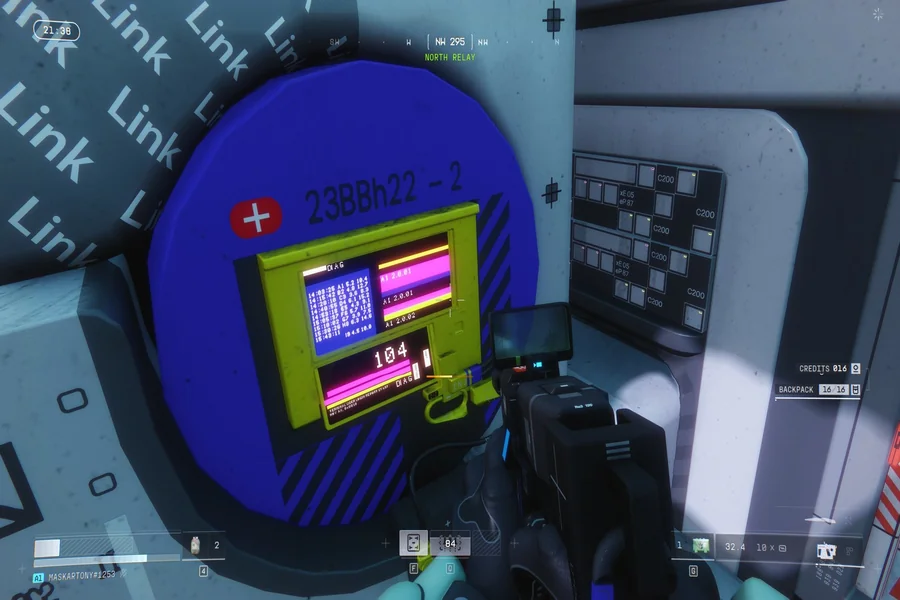
The graphic identity is unique. There is an atmosphere in Tau Ceti IV. The Runner Shells are memorable. The art direction has a dedication to a certain aesthetic style and performs it. Night Marsh S2 provides true tension. It is all about low visibility, hallucination mechanics, and horror edge, which Season 1 lacked.
The loot and build system is a real one. Weapons have three to four mod slots, which alter their functionality. Implants, Cores, and faction upgrades are overlaid into something that players can carve meaningfully.
Server Wipes Every Season
Full seasonal wipes (gear, levels, faction progress, credits, and vault) reset every new season. This is typical of extraction shooters. Escape From Tarkov has been around for almost ten years. Path of Exile has built a major part of its identity around league resets.
However, Marathon’s audience is not exclusively extraction shooter veterans. It pulls from Destiny players and casual FPS players. For that audience, losing everything every few months feels like punishment rather than design.
The wipe also implies that none of the players who did not invest much time in Season 1 earn credit. The difference between a serious and non-serious player gets reduced to zero at the beginning of the season. Of course, this is a good idea in terms of fairness. However, a serious player also loses all that they established. That is an actual tradeoff, and it is not acceptable to all. Many players use a Marathon boost to rebuild key progression quickly after a wipe, simply because starting from scratch every season is a significant time commitment.
What is The Learning Curve Problem?
Marathon does not soften players down. The tutorial demonstrates the process of movement and picking up items. Then, it is up to a player to navigate on their own. This can be menus of contracts, Armory, Shell customization, faction upgrades, and Vault management at once.
This was flagged by several reviews. According to MMORPG.com, the in-game UI delivers too much data during active gameplay, which distracts from the gameplay. GameSpot identified that nearly all loot serves certain purposes in the form of healing, enemy tracking, and faction upgrades. Players are supposed to know all of it instantly.
In February 2026, Server Slam beta attracted 143,000 players at once. At the weekend, this figure had decreased to about 70,000. Community feedback from that test consistently identified two problems. The UI was confusing, and the objectives were unclear.
Bungie shipped the game anyway. The UI improved slightly at launch. However, the onboarding problem persisted through Season 1. Season 2 addressed some friction points. The learning curve is still steep.
The Microtransaction Backlash
The monetization controversy at launch was specific and well-documented. Runner Shell skins cost 1,120 Lux in the store. The $10 currency bundle granted 1,100 Lux — exactly 20 short of what was needed. Purchasing the skin required an additional $5 bundle, bringing the effective cost to $15 for something advertised alongside a $10 option.
Players were observed for a few days. Bungie reacted publicly in a week. They offered Lex more per dollar and gave out credits to earlier purchasers. The fix came. There was no use repairing the damage to trust. It was not the initial impression that a live-service game desires to create.
The Numbers Tell a Complicated Story
At launch, Marathon peaked at around 88,000 concurrent Steam players and earned over 90% positive reviews with an 81 on OpenCritic. These were strong numbers for a new IP in a crowded genre.
And the audience shrank. As of May 2026, when Sony released its FY25 earnings report, Marathon was down to between 10,000 and 15,000 concurrent Steam players. Sony reported a loss of $765 million in impairment of Bungie due to poor performance of both Destiny 2 and Marathon. The game did not live up to the sales and the number of players. Sony has not officially disclosed cumulative sales.
Marathon was positioned as the great revival of franchises. The expectations were huge with the purchase at $3.6 billion. The difference between those expectations and reality is difficult to overlook.
What Season 2 Is Trying to Fix
Bungie designed Season 2 with retention in mind. The Cradle system simplifies the process of progression. Night Marsh provides content that is enjoyable to both veterans and newcomers. Sponsored Survival also has a less aggressive mode where players are not required to be in full PvP lobbies. The Open Play Week attracted new players as well as returning players. These are tangible enhancements. A studio that is ready to re-create core systems six months after launch is not a give-up studio.
Can It Hold Players?
Marathon has the foundation for long-term success. The gunplay feels solid, the world is memorable, and systems like weapons, implants, and faction upgrades give players meaningful ways to build their Runner. However, the real test is retention, not potential. Season 1 showed that a strong launch isn’t enough on its own, and Season 2 is Bungie’s chance to prove these changes can keep players coming back. By the time Season 3 arrives, the only question that will matter is whether the audience is still there.
Leave a Reply
You must be logged in to post a comment.