
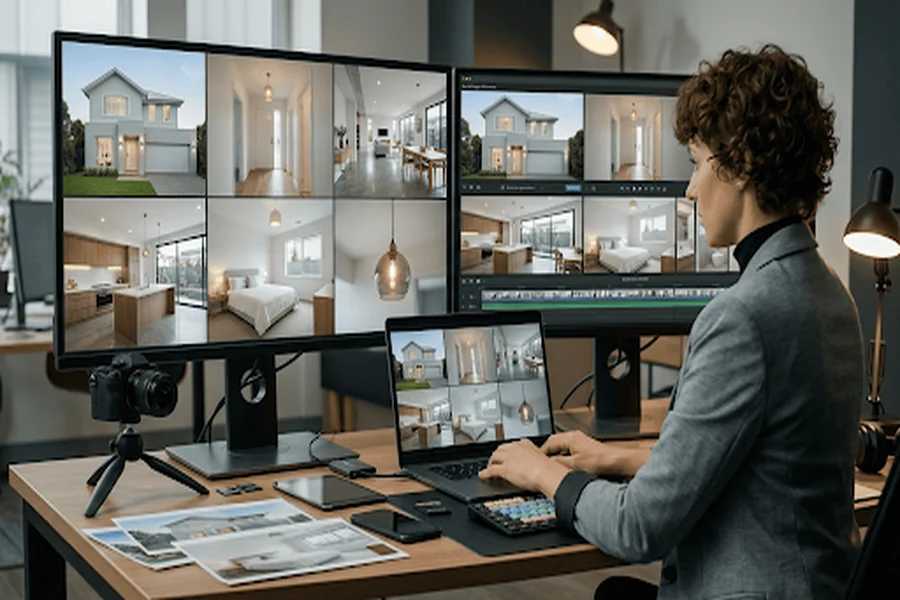
How Seedance 2.0 Puts Video on a Listing That Only Has Photos
Almost every marketplace now supports video on a product listing, and almost no small seller has one.
The reason is not indifference. It is that photographs feel achievable and video does not. A photograph is one decision made once. A video implies a sequence, a beginning, some kind of movement, a finish, and somewhere in the back of the mind a suspicion that it needs music and titles and something resembling editing.
So the listing goes up with eight photographs and an empty video slot, and stays that way.
That gap is smaller than it looks. Most of what a listing video needs can be filmed on a table in ten minutes, and the parts that cannot be filmed are exactly the parts Seedance 2.0, with practical workflows through Higgsfield produces.
Why does a listing with video outperform one without?
Because it answers the questions photographs leave open, and those questions are where a purchase stalls.
Scale is the first. A photograph of an object against a plain background could be any size. A hand picking it up settles the question permanently, and scale confusion is among the most common causes of returns.
Material behaviour is the second. How a fabric drapes, whether a hinge is stiff, how a finish catches light as it turns, whether a container feels substantial. Photographs freeze all of that.
And the third is simply confidence. A seller who has filmed the item is a seller who has the item, which sounds obvious and matters enormously on a marketplace where a buyer is choosing between several listings of something similar.
There is a platform effect as well. Marketplaces surface listings that keep people on the page, and a video does that by definition. The listing is being rewarded for holding attention rather than for the video being good.
What do marketplaces accept and encourage?
A fairly forgiving specification, which is worth knowing because sellers assume otherwise.
Most platforms take a short clip in a standard format, at ordinary phone resolution, with or without sound. Several accept vertical, several prefer square, and most will letterbox whatever they are given rather than rejecting it.
What they tend to prohibit is promotional framing. Prices, contact details, offers, external links and anything directing a buyer off the platform. That is consistent across the major marketplaces and it is the most common reason a submitted video is refused.
Some require the video to show the actual product, which is the right rule and is worth treating as universal regardless of whether a given platform enforces it.
And most cap the length, usually somewhere between thirty seconds and a couple of minutes. The cap is rarely the constraint, because the useful version is shorter than the maximum anyway.
How long does a buyer watch before deciding?
Not long, and planning around that changes what the video should contain.
Attention on a listing page is already committed to a decision rather than to entertainment. Somebody is there to establish whether this item suits them, and they will stop watching the moment they know.
Which means the informative part goes first. The product, in hand, at real scale, doing whatever it does. Not a logo, not a title card, not a slow reveal.
Fifteen to thirty seconds covers most items. Longer versions exist for anything complex to assemble or operate, and those belong further down the listing rather than in the primary slot.
And it should work silently, since a large share of viewing happens with sound off. Anything essential communicated by voice alone is communicated to about half the audience.
What can be filmed on a table in ten minutes?
More than most sellers expect, and this is the part worth doing properly because it cannot be produced any other way.
The item turning slowly, held or on a rotating surface, so a buyer sees every side.
A hand picking it up, which settles scale in two seconds and is the single most valuable shot available.
Whatever it actually does. Opening, closing, folding, pouring, adjusting, connecting. The mechanism, briefly.
A close pass across the finish or the texture, which conveys quality better than any still.
And the packaging, if it is part of the proposition, since buyers care how things arrive.
Five shots, a phone, a window for light and a plain surface. That is the entire filming requirement, and everything in it is genuine footage of the actual item.
Which parts of the setup are worth spending on?
Almost none of it, which is the encouraging part of this whole exercise.
Light is free. A window on an overcast day is a better light source for small products than any lamp a seller would buy, and it costs nothing but filming during daylight.
The surface costs very little. A sheet of plain board or a roll of paper, propped so it curves up behind the item, removes the need for any background work afterwards.
A phone is sufficient. Listing video is watched at small sizes on other phones, and the resolution gap between a camera is much less noticeable at that scale.
What is genuinely worth a small spend is something to hold the phone steady, since handheld footage of a small object wobbles noticeably, and a rotating surface if the range suits turning shots.
And the rest of the budget belongs in the production side, meaning the Seedance 2.0 openings, the context and the seasonal material that a table setup cannot produce. That is where Seedance 2.0 sits, and it is the only part of this that a window and a sheet of paper cannot cover.
The useful principle: spend nothing on making the filming look professional, and put the effort into what happens around the footage.
Which gaps does Seedance 2.0 fill around that?
The framing, which is what turns five phone clips into something that reads as a finished piece.
An opening. The five shots begin abruptly because nobody films an establishing view of a table, and a Seedance 2.0 passage covers it. A short generated passage gives the sequence somewhere to start.
Context around the product. The setting it belongs in, the environment it is used in, the season it suits. This is the material sellers most often want and least often have.
Seedance 2.0 transitions between clips filmed at different moments under slightly different light, which otherwise cut against each other visibly.
And a closing frame from Seedance 2.0, since product footage simply stops.
Seedance 2.0 produces fifteen seconds in a single continuous pass with audio generated alongside, which is about the length each of those passages needs. It accepts up to twelve reference inputs, so supplying photographs of the actual item and the actual setting keeps the generated material consistent with what the buyer is about to see rather than generic.
The practical effect is that the filming stays ten minutes and the result stops looking like five phone clips in a row. Higgsfield, which runs as an AI creative suite with the generation and the assembly in one place, is where that happens.
Does the product itself ever get generated?
No, and this one is not a matter of judgement.
The item in a listing video must be the item being sold. A buyer is making a purchase decision from that footage, and generated product imagery in a commercial listing is a misdescription regardless of how accurate it looks.
That extends to anything demonstrating function. If the video shows a mechanism working, a fabric draping or a container holding something, that has to have actually happened in front of a camera.
It also extends to condition. For anything secondhand, refurbished or handmade, the footage shows what the buyer receives, including the marks and variations that come with it.
Generated material handles the surroundings and nothing else. The opening, the context, the transitions, the closing. None of those make a claim about the product.
The line is easy to hold in practice. If the item is on screen, a camera filmed it. If Seedance 2.0 produced the frame, the item is not in it.
What happens when the range runs to eighty items?
The arithmetic changes and the approach has to change with it.
Filming five shots per item is ten minutes, which is fine once and is thirteen hours across eighty products. Nobody does that in one go, which is why ranges get partial video coverage that then looks inconsistent.
The workable method is to batch the filming and standardise the framing. One session, one surface, one light source, the same five shots for every item. That is considerably faster per unit than doing them individually and it produces footage that cuts together.
Then produce the surrounding material once in Seedance 2.0 and reuse it. The opening, the context and the closing do not need to be unique per product within a range. A set of homewares or a line of components can share them, which is where the effort collapses.
Start with what sells. Seedance 2.0 material on the ten best-performing listings is worth more than partial coverage across eighty, and it establishes whether the effort is justified before the rest of the range is attempted.
Where else do these clips end up?
Several places, from the same production.
Social posts, where the same footage performs without modification and where vertical is the required shape.
Messaging catalogues, which for a great many small sellers is the actual sales channel rather than a supplementary one.
The seller’s own site, if one exists, where a product page video does the same job as on a marketplace.
Replies to enquiries. Somebody asking how large something is, or how it opens, can be sent fifteen seconds rather than a paragraph, and that exchange converts at a different rate.
And wholesale or stockist conversations, where a buyer assessing a range benefits from seeing items handled rather than photographed.
One production, five destinations, which is the honest case for spending the evening.
How much survives to the second season?
Most of it, which is the part that makes this worth starting.
The filming convention carries over. Same surface, same light, same five shots, so the second batch takes half as long as the first because no decisions are being made.
The Seedance 2.0 material carries over too. Openings, context and closings produced for a range serve the following season’s additions without being remade, and Higgsfield storing them is what makes that retrieval possible a year later rather than theoretically possible.
And the Seedance 2.0 treatment carries over, meaning new items match the existing range automatically rather than requiring somebody to remember what was done.
What does not carry over is seasonal context, which is the one thing worth regenerating in Seedance 2.0. A range presented against autumn material in September and spring material in March costs very little to refresh and makes a catalogue feel current.
What does a single evening produce?
Video on the listings that matter, which is a reasonable return for one session.
Clear a table near a window and set up one plain surface. Higgsfield handles everything the table cannot.
Film the five shots for your ten strongest products, without stopping to review. Reviewing is what turns ten minutes per item into thirty.
Produce one opening, one context passage and one closing in Seedance 2.0 via Higgsfield, anchored to photographs of the actual items and setting.
Assemble the first product in Higgsfield, get it right at fifteen to thirty seconds, and use that as the pattern for the rest.
Export vertical and square from Higgsfield, since those cover the listing, the social post and the messaging catalogue.
Save the Seedance 2.0 treatment, which is what makes the eleventh product a five minute job rather than an hour.
Conclusion
An empty video slot on a listing is not a production problem. It is the assumption that video means something larger than five phone clips filmed on a table beside a window.
The filming is ten minutes and it has to be real, because the buyer is deciding from it. What surrounds that footage is where Seedance 2.0 belongs, and Higgsfield keeps the openings, the context and the treatment so the second product costs a fraction of the first.
Film the hand picking it up. That one shot answers more questions than the other four combined.
Leave a Reply
You must be logged in to post a comment.