
Tech-Driven Fitness Trends Power India’s Health Revolution
Phones beep through sunrise stretches, heart-rate charts appear next to nighttime chai, and fitness has fallen out of the gym and into pockets throughout India. Technology is not merely quantifying the drills, but rather, it is inspiring millions to move, breathe, and eat smarter as it is rewriting how the nation maintains its health.
The Breath of Tradition Yoga on the Screen
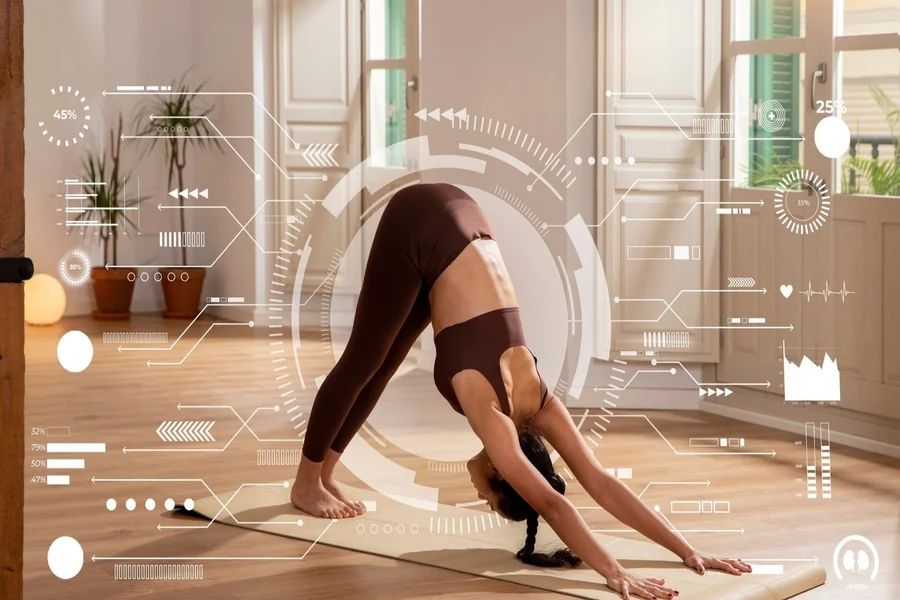
Even ten years ago guided yoga involved going to a local studio or a DVD. Nowadays, there are interactive apps that broadcast lessons in Assamese, Marathi, and Tamil, where a person can follow a teacher who speaks his native language. The cameras within the phone lens have motion tracking, and this real-time alignment and balance are rated with fun on-screen badges. Bengaluru-based start-ups licence AI pose-detection models to platforms across the world, which means a student in Raipur can get feedback as accurate as a student in California. In rural self-help groups, these sessions are broadcast on walls of community halls making group satsangs a mass wellness movement. To urban professionals, it is the convenience aspect that matters: desk-yoga reminders only take fifteen minutes and come between video meetings, perfectly aligned with wearable stress monitors. Physicians in major corporate hospitals today recommends what they call digital pranayama breaks to treat hypertension because research indicates there is a twelve-percent decrease in the resting heart rate after eight weeks of routine use of the app. India is digitising calm by blending the old tradition and data nudges without ruining the soul of it.
Crowded Streets E-Cycling and Connected Cardio
Indoor cycling studios used to have the exclusive air of large malls, but intelligent trainers and cheap sensors have turned the page. Cyclists in Ludhiana or Madurai strap their simple road bikes to Bluetooth rollers that recreate the physics of gradient, wind and drafting. The accompanying app transforms a small balcony into an imaginative ascent on Nandi Hills, full of leaderboard competitions. Through these channels national cycling federations can broadcast structured workouts where juniors in smaller towns can follow the same interval program as the elite racers. In the meantime, urban commuters adopt pedal-assist e-bikes, which connect to navigation apps, plotting the cleanest paths and showing calories burned relative to a ride on a scooter. Pune and Surat municipalities feed their data on anonymous rides into the traffic lights algorithms, which expand bike lanes where there are clusters. Even insurance companies have begun to send micro-discounts when people log habitual rides, with kilometres ridden being an equivalent of no-claims bonuses. Traffic, weather, and all the other obstacles that impeded its way are no longer an issue as cardio is now consistent with electric torque and gamified cadence drills making each spin session meaningful.
Smart Thali: Monitoring Macronutrients without the Flavour
A Gujarati thali or Hyderabadi biryani never had a calorie count associated with them until computer vision intervened. New nutrition apps can now scan a plate and list foods by colour and shape and guess macros based on local recipe databases. A consumer takes a photo of lunchtime dal-chawal, and the application recommends adding a cup of curd to balance the diet with protein or replacing white rice with millet on a training day. Stuck painlessly to the arm with integrated glucose monitors, the spikes and dips go straight to meal logs and teach users to understand how fenugreek or cinnamon truly works to straighten their sugar curve. Bengaluru restaurants have been testing out QR codes on the menus that bring in the macros of the dishes directly into the trackers of the diners, prompting sensible orders without a sermon on the importance of dieting. Ayurvedic treatment centers collaborate with these technology companies to combine historic diagnostic knowledge and contemporary biochemistry by matching dosha profiles with the micronutrient trends. Food has not been made a boring statistic, it is still a festive thing, but every vice comes with an explicit blueprint of how to get back to center.
Competitive Gamified Challenges, and a Taste of Social Accountability
Technology can hopefully give the means, community the fire to keep going. Cousin step-offs on messaging platforms have cousins across continents competing in light-hearted competition, with memes to go along with the targets they miss. Team standings are displayed on corporate wellness dashboards next to sales figures, and it shows that a hearty walk during lunch can affect the mood on Friday. Influencers organize push-up streaks that last a month, and the competitors post one-take videos as verification and create authenticity and get rid of filtered perfection. Even platforms primarily known for entertainment or pm parimatch sports chatter now embed fitness trivia and prediction leagues; answering correctly after finishing a five-kilometre run unlocks bonus features, blurring lines between fandom and physical activity. According to psychologists, these hybrid awards engage dopamine circuits in the brain better than single training schemes. What it ends up with is a culture in which a sweaty selfie is not a sign of narcissism but a symbol of sticking to a schedule, and in which missing a session is like failing to keep a promise to an online crew that hypes each rep with more enthusiasm than a fittest instructor.
Conclusion
The rebirth of fitness in India does not have to do with costly membership fees or foreign equipment. It is favored with pocket-sized yoga studios, AI-assisted meal recommendations, virtual cycling roads, and digital cheering sections, who all speak their own dialects. Technology did not substitute discipline instead, it has only intertwined knowledge, responsibility, and pleasure into the practices that used to be discarded as festive periods ended. With apps that adjust posture in millimetre increments and algorithms recommending turmeric and quinoa combinations before pre-dawn rides, health is no longer something you have to control with self-discipline, but a smart habit loop. The country that spread yoga to the rest of the world is rediscovering wellness on sensors and screens, and the outcome of this new wellness is the validation that the combination of modernity and tradition can jog together, breathe deeply, pedal steadily and count one data-rich step at a time towards national wellness.
Leave a Reply
You must be logged in to post a comment.