
Virtual Pit Stops: How Formula 1 Drivers Use Simulators to Win Real Races
In modern Formula 1, testing a real car on an actual track is heavily restricted by regulations and soaring costs. Gone are the days when teams could log tens of thousands of miles on private test tracks prior to race weekend. To gain a competitive edge, teams have turned to cutting-edge technology—transforming multi-million-dollar simulator setups into the ultimate training ground.
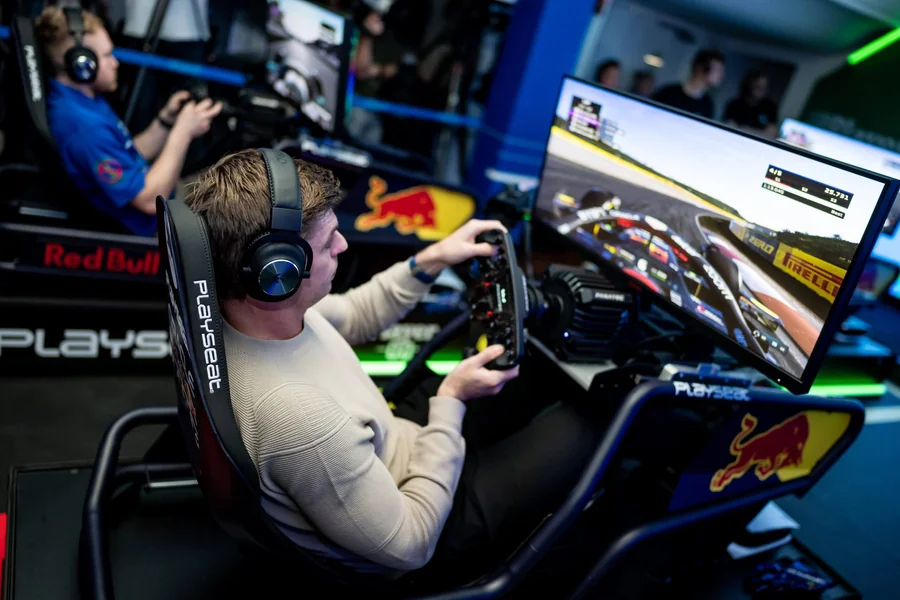
Far beyond home gaming rigs, F1 simulators are advanced engineering tools that allow drivers and telemetry teams to optimize race strategies, perfect pit stop timing, and master track layouts before ever stepping foot on real asphalt.
1. Perfecting Pit Stop Windows & Strategy
A Formula 1 race is often won or lost on the pit wall. Deciding whether to execute a one-stop or two-stop strategy requires massive amounts of data: tire degradation rates, fuel load weights, and real-time track evolution.
Simulators allow reserve and simulator drivers to run thousands of virtual laps during race weekend setup. While the main drivers are sleeping on Friday night, simulator drivers back at team headquarters (like Red Bull’s Milton Keynes or Mercedes’ Brackley facilities) run live stint simulations based on Friday practice data. They calculate the precise lap window for an optimal pit stop, ensuring the real driver re-enters the track in clean air without getting trapped in traffic.
2. Replicating Dynamic Physics and Track Conditions
F1 simulators utilize Driver-in-the-Loop (DIL) technology mounted on massive hexapod motion platforms. These systems replicate G-forces, braking resistance, and suspension feedback with extreme accuracy.
- Laser-Scanned Circuits: Tracks are mapped down to millimeter accuracy using LiDAR technology, replicating every bump, curb, and surface transition.
- Tire Model Simulations: Teams use proprietary thermal models to mimic tire wear, thermal degradation, and graining under varying weather conditions.
- Dynamic Feedback: From force-feedback steering to visual horizons projected on 180-degree curved screens, drivers experience near-identical physical cues to real-world driving.
Finding the optimal trajectory through a tight chicane or finding an available slot gacor of space along the wall during an overtake is rehearsed dozens of times virtually before Sunday’s race.
3. Developing and Fine-Tuning Setup Adjustments
During a race weekend, teams only get three hours of free practice time to dials in setup options like wing angles, ride height, and differential settings.
In the simulator, engineers can test hundreds of setup permutations in minutes. If a driver reports understeer through medium-speed corners during Friday morning practice, simulator drivers can test anti-roll bar adjustments or front-wing flap changes overnight. When the driver returns to the track on Saturday morning for qualifying, the car’s baseline setup is already refined.
Formula 1 drivers rely on advanced racing simulators to prepare for real competitions. These virtual environments help them practice tracks, refine strategies, and test car setups without leaving the garage. Teams analyze simulator data to improve performance, giving drivers valuable experience and a competitive edge before race day.
Real vs. Virtual F1 Setup Comparison
| Feature | Real F1 Car | F1 Team Simulator |
| Track Access | Strictly limited by FIA regulations | Unlimited 24/7 availability |
| Cost Per Kilometer | Extremely high (fuel, parts wear, tires) | Minimal (electricity & software maintenance) |
| G-Force Simulation | Up to 5-6G sustained physical load | Simulated via motion rigs and seat harness tensioners |
| Risk Factor | Crash damage costs millions and risks safety | Zero physical risk; instant session resets |
Leave a Reply
You must be logged in to post a comment.